PhotonIcs and Electromagnetics Research Symposium,
also known as Progress In Electromagnetics Research Symposium
PIERS Proceedings
Published: 2015-08-28
On an Application of the Hypothesis for the Identity of the L2(c,p,n) and L^2(c^,p^,n^) Numbers
By
Proceedings of 2015 Photonics & Electromagnetics Research Symposium, Prague, July 6 - 9,Page(s)1739-1744
Abstract
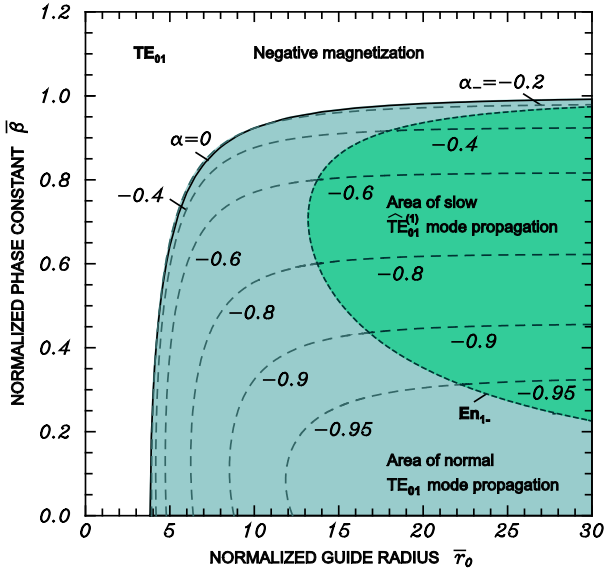
The theory of waveguides is pointed out as a field of application of the mathemati- cal hypothesis, asserting that the finite real positive numbers L2 (c, ρ, n) and L̂2 (ĉ, ρ̂, n̂), advanced through some positive purely imaginary, resp. real zeros in x, resp. in x̂ of a special function, con- structed by two complex Φ(a, c; x) and Φ(a, c; ρx), resp. real Φ̂(â, ĉ; x̂) and Φ̂(â, ĉ; ρ̂x̂) Kummer, and two complex Ψ(a, c; x) and Ψ(a, c; ρx), resp. real Ψ̂(â, ĉ; x̂) and Ψ̂(â, ĉ; ρ̂x̂) Tricomi confluent hypergeometric ones of appropriately picked out parameters and variable, are identical, provided it is fulfilled: c = ĉ, ρ = ρ̂ and n = n̂, (a — complex; â, c, ĉ, x̂, ρ and ρ̂ — real; ρ and ρ̂ — positive, less than unity; x — positive purely imaginary; n — natural and n̂ — positive integer; n and n̂ — numbers of the zeros). It is indicated that the truthfulness of statement formulated entails the coincidence in case c = ĉ = 3 of certain (envelope) curves in the phase diagrams (1) of the normal T E0n and of the one of the two possible slow TˆE 0n̂ modes — the TˆE 0n̂ wave (n = n̂) in the coaxial waveguide with ferrite, magnetized azimuthally in negative (clockwise) direction of equations, written in terms of the quantities L2 (c, ρ, n), resp. L̂2 (ĉ, ρ̂, n̂). The curves mentioned restrict the areas of propagation of the first (second) mode from the side of higher (lower) frequencies. Besides, the physical sense ascribed to parameter ρ (ρ̂) is a relative thickness of the central conductor of the structure and to n (n̂) — an order of the propagating mode.
Citation
Georgi Nikolov Georgiev, and Mariana Nikolova Georgieva-Grosse, "On an Application of the Hypothesis for the Identity of the L2(c,p,n) and L^2(c^,p^,n^) Numbers," Proceedings of 2015 Photonics & Electromagnetics Research Symposium, Prague, July 6 - 9,Page(s)1739-1744
References