PhotonIcs and Electromagnetics Research Symposium,
also known as Progress In Electromagnetics Research Symposium
PIERS Proceedings
Published: 2015-08-28
Application of Backscattering Models in Active-passive Microwave Remote Sensing of Ocean Salinity
By
Proceedings of 2015 Photonics & Electromagnetics Research Symposium, Prague, July 6 - 9,Page(s)890-893
Abstract
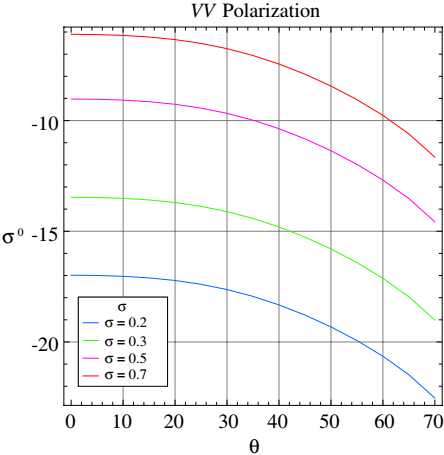
The program of new type combined active and passive L-band sensor will meet the science needs by providing global ocean salinity distribution. Before the reconstruction of ocean salinity by brightness temperature, surface roughness must be taken into account, which is the leading part of the error sources that influences the brightness temperature. So it is a crucial step to eliminate the excess brightness temperature engendered by roughness. The elimination can be implemented by sea surface backscattering coefficient, which is directly influenced by roughness. In this paper, the sea surface is regarded as a two dimensional isotropic random process and the influence of roughness for backscattering coefficient is discussed. This can be a fundamental way to get pairs of brightness temperature and backscattering coefficient and for better inversion of ocean salinity.
Citation
Y. J. Cai, H. Liu, Xiangkun Zhang, and Jie Zhu, "Application of Backscattering Models in Active-passive Microwave Remote Sensing of Ocean Salinity," Proceedings of 2015 Photonics & Electromagnetics Research Symposium, Prague, July 6 - 9,Page(s)890-893
References