PhotonIcs and Electromagnetics Research Symposium,
also known as Progress In Electromagnetics Research Symposium
PIERS Proceedings
Published: 2015-07-09
EM Exposure System with Well Defined Dosimetry
By
Proceedings of 2015 Photonics & Electromagnetics Research Symposium, Prague, July 6 - 9,Page(s)191-194
Abstract
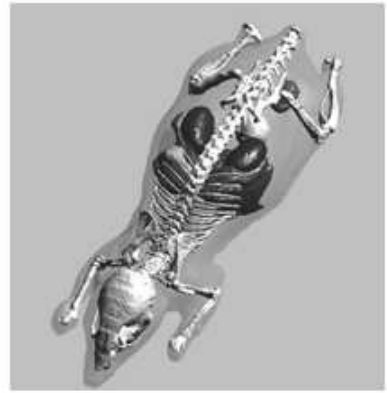
The whole-body exposure system for unrestrained mice was designed in order to analyze the influence of electromagnetic field. The setup operating at 900 MHz was designed with respect to induced uniform field, external radiation elimination, absorbed power determination, sufficient space for mice movement together with even mice exposure and costs. The main aim of this paper is to assure that the dosimetry results reached by computer simulations can be used for determination of absorbed power in the unrestrained mouse. The whole-body exposure chamber with anatomical mouse model was simulated by two different numerical methods: finite-difference- time-domain method (FDTD) and Finite Integration Technique (FIT) and its dosimetry results were compared by computed SAR values. In our contribution we will describe our first results dealing with observed biological effects of EM field, obtained by real exposures of experimental animals.
Citation
Jan Barcal, Ladislav Oppl, Luca Vannucci, Lukas Visek, Frantisek Vozeh, Jan Vrba, David Vrba, and Jan Vrba, Jr., "EM Exposure System with Well Defined Dosimetry," Proceedings of 2015 Photonics & Electromagnetics Research Symposium, Prague, July 6 - 9,Page(s)191-194
References

1. Kuster, Niels and Frank Schönborn, "Recommended minimal requirements and development guidelines for exposure setups of bio-experiments addressing the health risk concern of wireless communications," Bioelectromagnetics, Vol. 21, No. 7, 508–514, 2000.
doi:10.1002/1521-186x(200010)21:7<508::aid-bem4>3.0.co;2-f        Google Scholar

2. Fujiwara, O. and J. Wang, Electromagnetics in Biology, Springer, Japan, 2006.        Google Scholar

3. Dogdas, Belma, David Stout, Arion F. Chatziioannou, and Richard M. Leahy, "Digimouse: a 3D whole body mouse atlas from CT and cryosection data," Physics in Medicine and Biology, Vol. 52, No. 3, 577–587, January 2007.
doi:10.1088/0031-9155/52/3/003        Google Scholar

4. Stout, D., P. Chow, R. Silverman, R. M. Leathy, X. Lewis, S. Gambhir, and A. Chatziionnou, "Creating a whole body digital mouse atlas with PET, CT and cryosection images," Molecular Imaging and Biology, Vol. 4, No. 4, S27, 2002.        Google Scholar

5. Schmid & Partner Engineering AG, 2010, Online: http://www.semcad.com/.        Google Scholar

6. Computer Simulation Technology, 2010, Online: http://www.cst.com/.        Google Scholar

7. Gabriel, Camelia, Compilation of the Dielectric Properties of Body Tissues at RF and Microwave Frequencies, January 1996.
doi:10.21236/ada303903        Google Scholar